




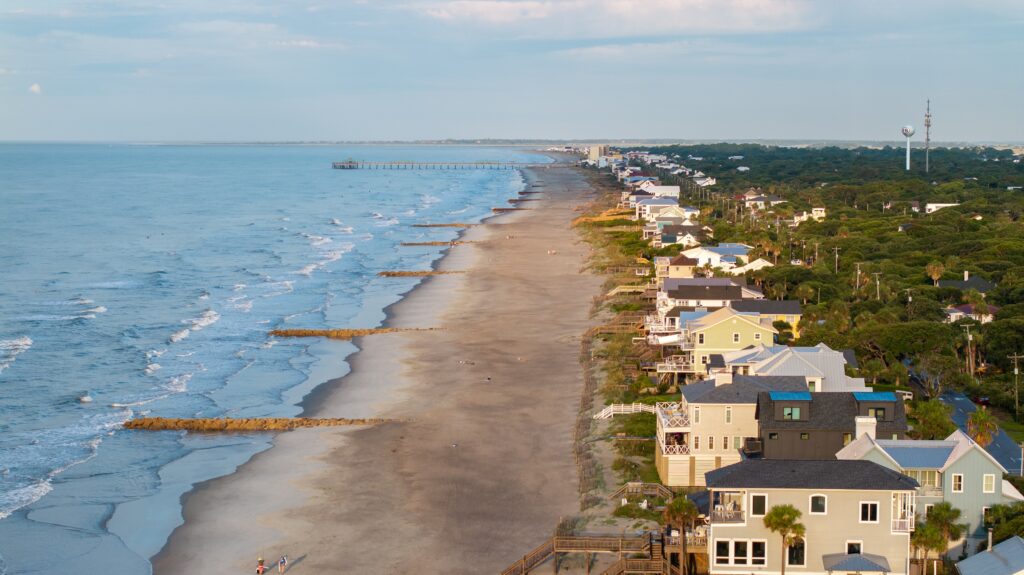
Investing in Charleston-area beach real estate isn’t just about buying in a popular location. The best return on investment depends on the type of guests you want to attract, your property’s operating costs, and how local regulations affect rental income. Folly Beach, Isle of Palms, and Wild Dunes each offer a different path to strong vacation rental performance.
How Do Rental Yields Compare?
Folly Beach tends to deliver strong occupancy thanks to its laid-back surf culture, walkable downtown, and pet-friendly appeal. These factors help support consistent weekend bookings and solid demand throughout the shoulder seasons, especially for cottages and oceanfront condos.
Isle of Palms generates some of the highest gross rental revenue in the Charleston market. Large luxury homes command premium nightly rates during peak summer months, although demand typically slows during the winter.
Wild Dunes benefits from built-in resort demand. Golfers, tennis players, and families help create steady bookings throughout spring, summer, and fall, often resulting in less seasonal fluctuation than non-resort beach properties.
Market Comparison at a Glance
The right island depends on your investment goals and preferred guest demographic.
Folly Beach attracts couples, young adults, surfers, and pet owners who enjoy its vibrant downtown and relaxed atmosphere. This creates strong weekend demand and reliable shoulder-season performance.
Isle of Palms appeals to luxury travelers and multi-generational family groups looking for spacious oceanfront and near-ocean homes. While purchase prices are typically higher, these properties often achieve some of the strongest nightly rates in the region during the summer season.
Wild Dunes offers a gated resort environment with amenities that appeal to vacationing families, golf groups, and tennis enthusiasts. Condo villas and golf course homes often benefit from consistent demand and a more turnkey ownership experience.
Average Daily Rates and Seasonal Occupancy Trends
Each island has its own seasonal booking pattern, and understanding those trends is key to maximizing rental revenue.
Isle of Palms commands some of the highest nightly rates on the South Carolina coast. Large homes with private pools and easy beach access can perform exceptionally well during the summer, with top luxury properties occasionally reaching $2,000 to $3,500 or more per night during peak weeks. While winter occupancy tends to be lower, strong summer revenue often makes up for the slower season.
Folly Beach sees steady demand beyond the summer months. Its proximity to downtown Charleston and reputation as a pet-friendly destination help attract visitors throughout fall, winter, and spring. While seasonal peaks still exist, revenue tends to be spread more evenly across the year than in some beach markets.
Wild Dunes benefits from year-round resort amenities, including two Tom Fazio-designed golf courses and nationally recognized tennis facilities. These attractions help drive travel during spring and fall, reducing some of the revenue swings commonly seen in summer-focused beach destinations.
Total Cost of Ownership: HOA Fees, Taxes, and Coastal Maintenance
When evaluating ROI, it’s important to look beyond rental income and consider ongoing ownership costs.
Properties within Wild Dunes often include HOA or regime fees that help cover exterior maintenance, landscaping, and community amenities. While these fees reduce net income, they can also lower the day-to-day maintenance responsibilities of ownership.
Many single-family homes on Folly Beach and in non-resort areas of Isle of Palms have fewer HOA costs, but owners are generally responsible for all exterior maintenance, insurance, and repairs. Some Isle of Palms neighborhoods and condo communities do have significant HOA fees, so it’s important to evaluate each property individually.
Non-resident investment properties throughout South Carolina’s barrier islands are taxed at a 6% assessment rate, compared to 4% for primary residences. Investors should account for this difference when projecting returns.
Regardless of location, coastal properties require ongoing attention. Salt air, humidity, and storm exposure make proactive maintenance, proper insurance coverage, and local oversight essential for protecting long-term profitability.
Regulatory Landscape: Licenses and Caps
Short-term rental regulations vary by municipality and can have a major impact on both income potential and future resale value.
Folly Beach currently operates under an 800-permit cap for investor short-term rental licenses, a policy upheld by a state appeals court in 2026. Because licenses are not automatically transferable, buyers should carefully verify licensing status, zoning requirements, parking compliance, and septic capacity before purchasing.
Isle of Palms allows whole-home short-term rentals but enforces occupancy, parking, and local response requirements. Wild Dunes properties must also comply with any applicable HOA or resort restrictions.
Before purchasing on any island, it’s important to confirm the property’s short-term rental eligibility, license status, and transferability.
Investor Verdict
The best investment depends on what you value most.
If your goal is maximizing peak-season revenue, Isle of Palms offers the strongest earning potential, particularly for large oceanfront and near-ocean homes.
If you prefer consistent weekend bookings and a vibrant local atmosphere, Folly Beach stands out for its surf-town charm and year-round appeal.
If you want a more turnkey ownership experience with resort amenities and steadier seasonal demand, Wild Dunes is often the most predictable option, though HOA and regime fees should be factored into your returns.
No matter which island you choose, working with an experienced local vacation rental management company can help maximize occupancy, optimize pricing, maintain compliance, and improve overall profitability.